Template · 21-page PDF · Premium
The Basic Grocery Shopping List: 30 Staples, Four Ways
Build a basic grocery shopping list that covers a full week: 30 core staples by aisle, a $100-week build, and four printable templates with a spend column.
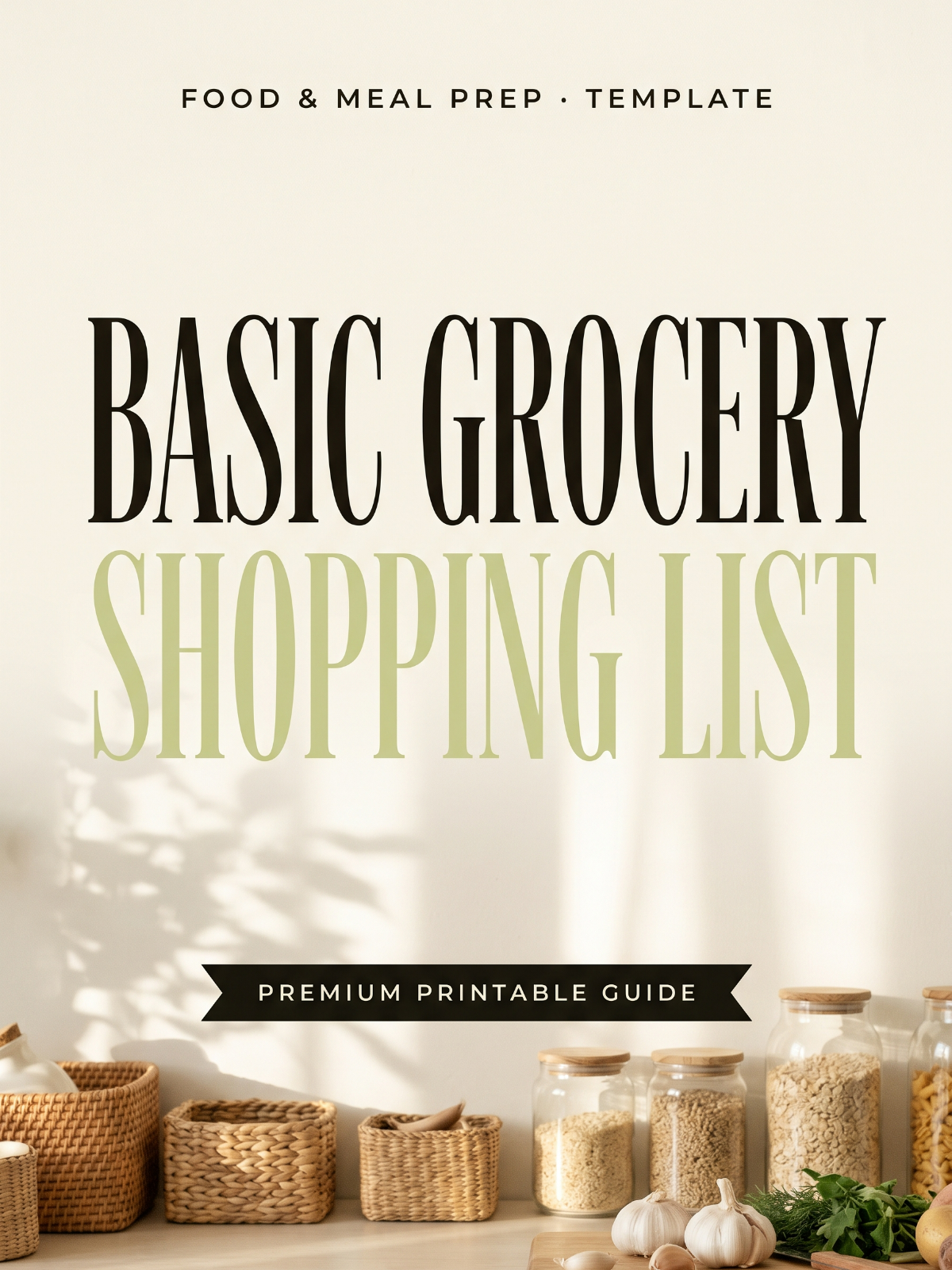
The full workbook, ready to print
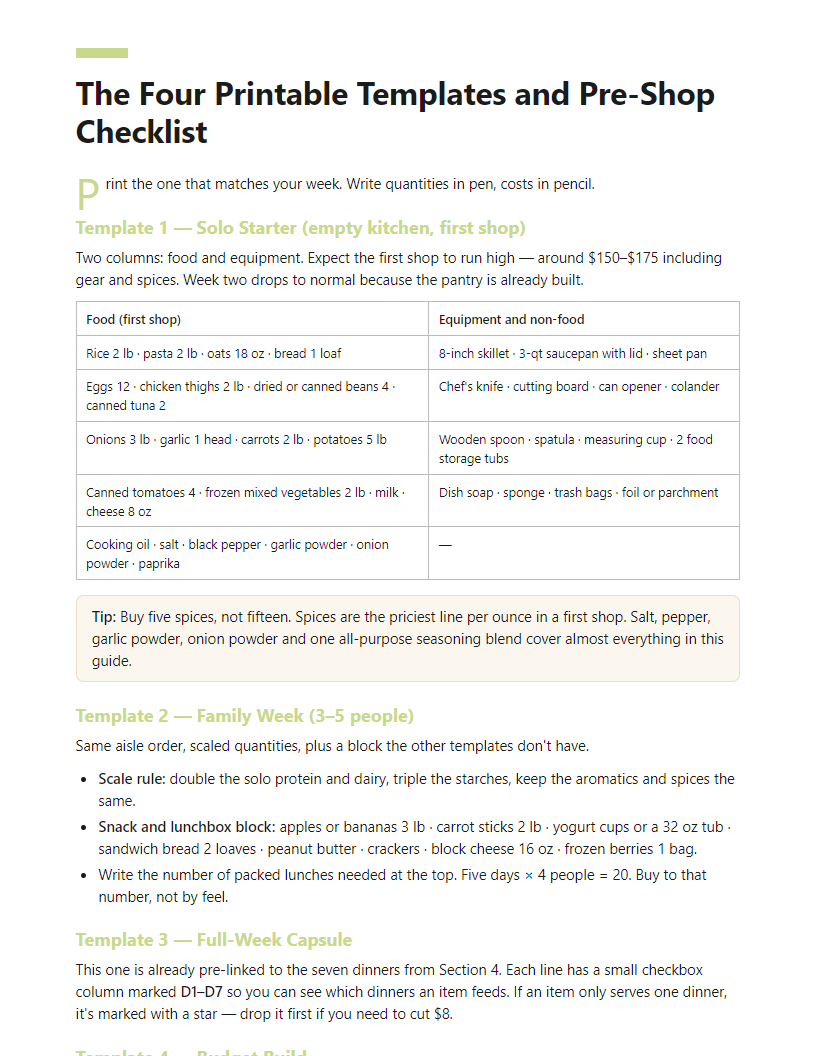
- ✓Four fillable templates: single, family, full-week and budget, each with a spend column
- ✓Step-by-step walkthrough for completing each template before you shop
- ✓Capsule meal plan: 7 dinners built from one 30-item list
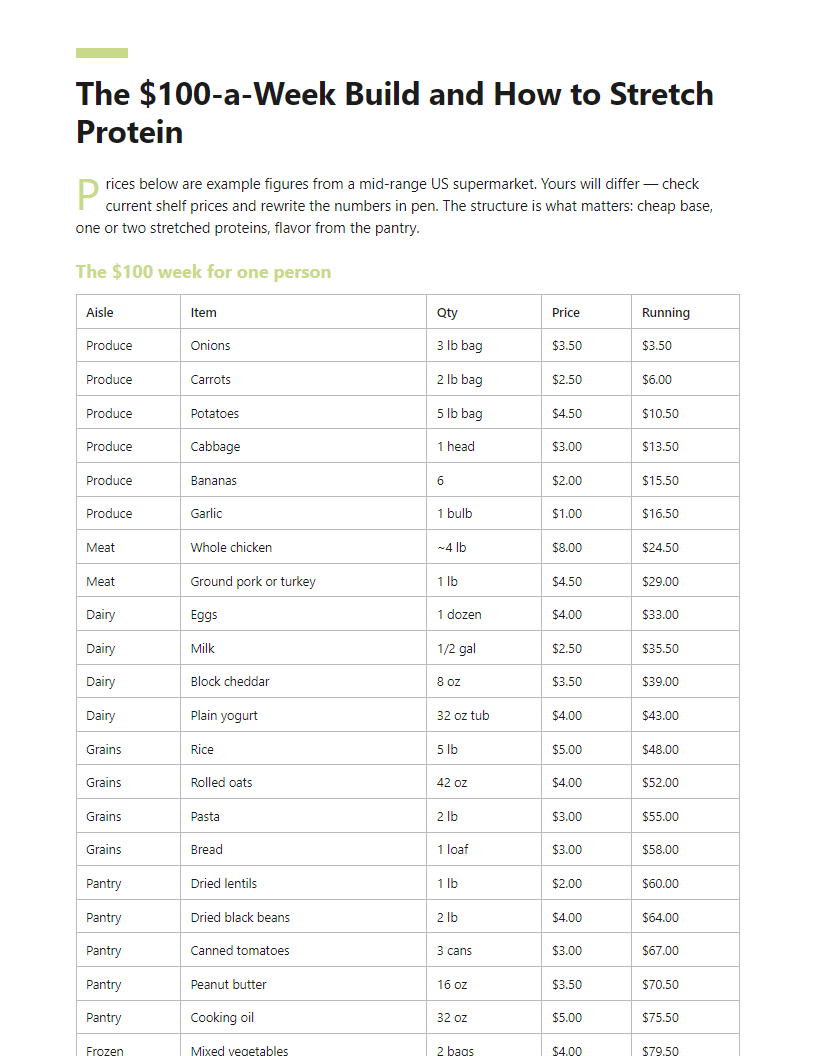
- ✓The $100-a-week build with a protein-stretching ratio table
- ✓Side-by-side diet swap chart: vegan, vegetarian, low-carb/keto, allergy-safe
- ✓Spoilage-control schedule for small households and limited pantry space
- ✓Pre-shop checklist to run before leaving the house
Hosted on FileJoker. Premium members download instantly; free download has a wait.
In a hurry? Free one-page checklist31 items to tick off · print-ready PDF, no sign-upDownload freeIncluded bonuses — free with the guide
2 extra guides from the same topic Free PDF · 18 pagesThanksgiving Meal Checklist: From 14 Days Out to LeftoversBuild a Thanksgiving meal checklist that works: menu, guest count, shopping quantities and an hour-by-hour oven plan. Free printable checklist inside.
 Free PDF · 16 pagesBest Meal Prep Recipes: A 5-Day No-Repeat Plan That Holds UpBest meal prep recipes without the Day 3 boredom: a 5-day no-repeat framework, storage timelines, verified macros, plus a free planner and shopping list.
A look inside the PDF
9 sections · 21 pages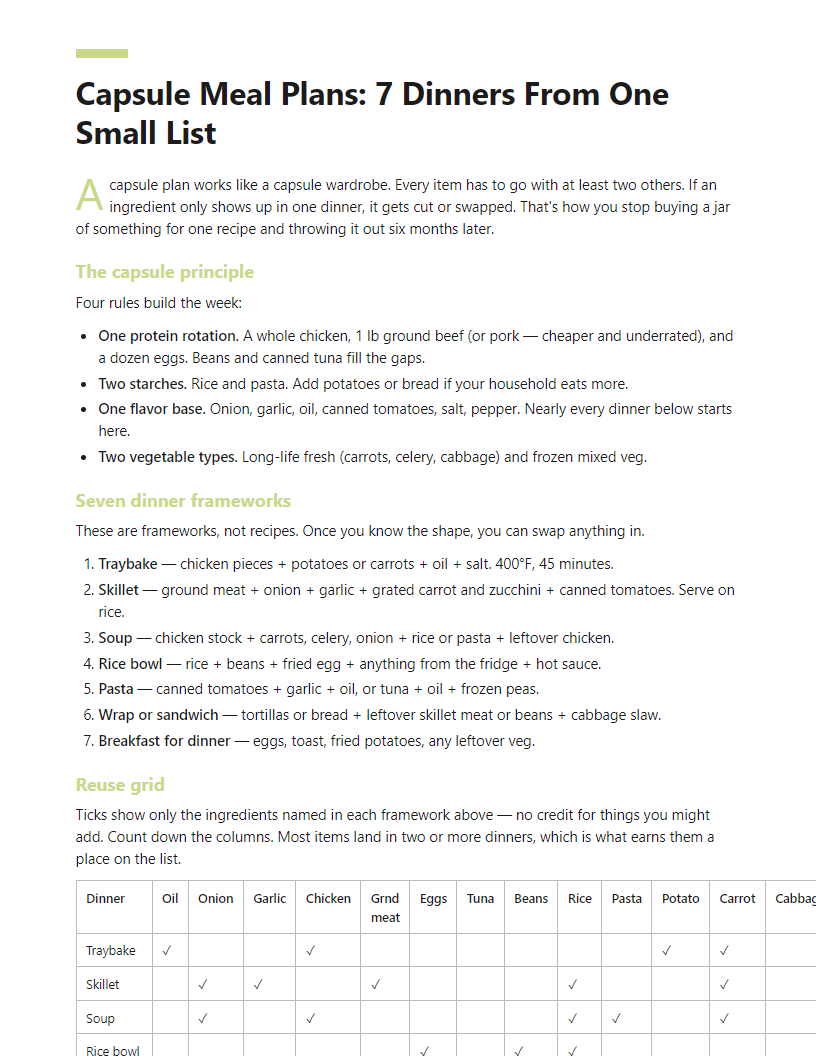
Full table of contents
- Why "Basic" Means Something Different for Every Kitchen
- The 30-Item Universal Basic List (and Why People Argue About It)
- Filling In the Four Templates, Step by Step
- Capsule Meal Plans: 7 Dinners From One Small List
- The $100-a-Week Build and How to Stretch Protein
- Diet Adaptations: Vegan, Vegetarian, Low-Carb/Keto, Allergy-Safe
- Small Kitchens, Small Households: Storage and Spoilage Control
- Eight Mistakes That Inflate a Basic Grocery Bill
- The Four Printable Templates and Pre-Shop Checklist
In this article
You’ve just moved out, or you’re staring at a fixed budget thinking “what am I actually supposed to buy every week?” Everyone online disagrees — one person swears a basic grocery shopping list needs beans and cabbage, another says oats and potatoes, and half the produce you bought last week went soft before you cooked it.
This page gives you a plain breakdown of what “basic” really means: 30 universal staples organised by store department, the eight habits that quietly inflate your bill, and straight answers to the rules people keep quoting.
The premium PDF goes further — four fillable templates (single, family, weekly, budget), capsule meal plans, a $100-a-week build, and diet swaps for vegan, keto and allergy-safe kitchens.
The short answer
A basic grocery shopping list covers six departments in roughly this order:
- Produce — onions, potatoes, carrots, cabbage, bananas, one leafy green.
- Protein — eggs, chicken, ground meat or canned fish, dried or tinned beans.
- Dairy — milk, butter, cheese, yoghurt.
- Grains & starches — rice, pasta, oats, bread, flour.
- Pantry & cans — oil, tinned tomatoes, stock, salt, pepper, garlic, basic spices.
- Household — dish soap, bin bags, paper goods.
Buy roughly 30 items, repeat the core weekly, and rotate only the produce and protein.
Why “Basic” Means Something Different for Every Kitchen
Ask ten people for a basic grocery list and you get ten different lists — plus an argument. One says you forgot beans. Another says potatoes beat rice. Someone always mentions frozen peas. They’re all right, because “basic” depends on who’s cooking, how often, and with what equipment.
Most free printable lists quietly assume three things: four people at the table, a pantry already stocked with oil and spices, and no allergies or diet rules. If you just moved out with an empty cupboard, that list is wrong on all three counts. Expect to spend $150–$200 on a first stock-up that produces almost no meals — spices alone eat a big chunk of it. That’s normal. It’s a one-time cost, not your weekly bill.
The three-layer model
Every template here is built the same way:
- Core staples (~20 items). Oil, rice, pasta, flour, canned tomatoes, beans, oats, salt and a few spices. Bought rarely — some last months.
- Rotating proteins (3–4 per week). Eggs plus two or three others: chicken, ground beef, canned tuna, lentils, yogurt.
- Fresh refresh (4–7 days only). Onions, garlic, carrots, greens, fruit. Buy what you’ll actually eat before it rots, and back it up with frozen vegetables.
Layer one barely changes. Layer three changes every week. That’s why a single printable can’t serve everyone.
Which template to fill in first
| Your situation | Start with | Why |
|---|---|---|
| 1–2 people, new kitchen, no pantry | Solo Starter (s3) | Small quantities, builds staples over 3 weeks |
| 3–5 people, kitchen already stocked | Family Week (s3) | Scaled quantities, bulk-friendly |
| Any size, want zero decision fatigue | Full-Week Capsule (s4) | Fixed list, 7 dinners already mapped |
| Hard ceiling under about $100/week | $100 Budget Build (s5) | Protein-stretching built in |
| Vegan, vegetarian, keto or allergy | Pick above, then apply s6 swaps | Swap the protein layer, keep the rest |
Each template has a cost column. Write your estimated price next to each item before you shop, total it, and cut from the bottom until the number fits your budget. That turns a list into a spending plan.
The 30-Item Universal Basic List (and Why People Argue About It)
These 30 items cook more meals per dollar than anything else in the store. They’re grouped the way you’ll shop: fats and flavor, grains and starches, proteins, long-life produce, canned and frozen backup.
Prices move constantly. Treat the cost column as a ballpark for a mid-range US supermarket and check current figures at your store.
| # | Item | 1 person/week | 4 people/week | Approx. unit cost |
|---|---|---|---|---|
| Fats & flavor | ||||
| 1 | Cooking oil (vegetable or olive) | 4 oz | 12 oz | $4–9 / 16 oz |
| 2 | Butter | 2 oz | 8 oz | $4 / lb |
| 3 | Salt | — | — | $1 / 26 oz |
| 4 | Black pepper | — | — | $3 |
| 5 | Garlic powder | — | — | $2 |
| 6 | Onion powder | — | — | $2 |
| 7 | Dried mixed herbs or chili flakes | — | — | $2 |
| 8 | Onions | 2 | 6–8 | $1 / lb |
| 9 | Fresh garlic | 1 head | 2 heads | $0.60 |
| 10 | Soy sauce or hot sauce | — | — | $3 |
| Grains & starches | ||||
| 11 | Rice | 1 lb dry | 3–4 lb | $1 / lb |
| 12 | Pasta | 1 lb | 3 lb | $1.20 / lb |
| 13 | Bread or tortillas | 1 loaf | 3 loaves | $2–3 |
| 14 | Oats | 1 lb | 2 lb | $2 / 18 oz |
| 15 | Potatoes | 2 lb | 5 lb | $0.80 / lb |
| 16 | All-purpose flour | small bag | small bag | $3 / 5 lb |
| Proteins | ||||
| 17 | Eggs | 6–12 | 24–36 | $3–5 / dozen |
| 18 | Chicken (thighs or whole bird) | 1.5 lb | 4–5 lb | $1.50–2.50 / lb |
| 19 | Ground beef or turkey | 1 lb | 2 lb | $4–6 / lb |
| 20 | Dried or canned beans | 1 lb dry / 3 cans | 3 lb / 8 cans | $1.50 lb · $1 can |
| 21 | Lentils | 8 oz | 1 lb | $1.80 / lb |
| 22 | Canned tuna | 2 cans | 4 cans | $1.20 / can |
| 23 | Milk | 1/2 gal | 2 gal | $3 / gal |
| 24 | Cheese (block) | 8 oz | 1.5 lb | $4 / 8 oz |
| 25 | Yogurt or peanut butter | 1 tub / 1 jar | 2 | $4 |
| Long-life produce | ||||
| 26 | Carrots | 1 lb | 2 lb | $1 / lb |
| 27 | Cabbage | 1/2 head | 1 head | $2 / head |
| 28 | Apples or bananas | 5–7 | 20 | $0.70 each |
| Canned & frozen backup | ||||
| 29 | Canned tomatoes | 2 cans | 5 cans | $1 / can |
| 30 | Frozen mixed vegetables or peas | 1 lb | 3 lb | $1.50 / lb |
The four “you forgot” items
Every basic list gets the same four complaints. Each one is right under certain conditions.
- Beans. Cheapest protein per pound, no refrigeration, no spoilage. Earn their place the moment your budget drops below about $100 a week.
- Potatoes. More filling per dollar than rice or pasta, and more nutritious. Include them if you have a cool, dark spot to store 5 lb; skip if your only storage is a warm cupboard.
- Oats. Breakfast for 30 cents a bowl. Include unless you genuinely won’t eat them — a bag of uneaten oats is not savings.
- Cabbage. Keeps two to three weeks whole in the fridge, unlike bagged salad. Include if your leafy greens keep turning to slime.
What looks essential and isn’t
- Bottled dressings. Oil, vinegar, salt, pepper. That’s dressing.
- Single-use sauces. Taco seasoning, stir-fry sauce, pasta sauce packets. Canned tomatoes plus your spice jars cover all three.
- Pre-cut produce. You pay two to three times per pound for the knife work.
- Specialty flours. Almond, coconut, bread flour. Only buy once a specific recipe is in your weekly rotation.
Quantities, not just names
A new shopper’s biggest mistake is buying one of everything. One adult cooking most meals at home uses roughly 1 lb of dry rice or pasta, 4 oz of oil, 6–12 eggs, and 2.5–3 lb of meat or an equivalent in beans and eggs per week. Scale from there.
Tip: Your first shop costs more than every shop after it. Budget about $150–$175 all in for an empty kitchen (see the Solo Starter template in Section 9). Of that, $40–60 is the spice, oil, flour and condiment subset — the part that then lasts two to three months. The rest is equipment plus your normal week of food.
Swapping items out
Dairy-free, gluten-free, vegan, vegetarian, keto and allergy-safe versions of every line above are mapped item by item in Section 6. Fill in this 30-item list first, then run it through that table before you shop.
One swap that isn’t on the Section 6 table: if peanuts are the allergen, replace peanut butter with sunflower seed butter. It costs more per jar but works the same way in sandwiches, oatmeal and sauces.
Eight Mistakes That Inflate a Basic Grocery Bill
Most bills don’t balloon from one big splurge. They leak $3 and $5 at a time. Here are the eight leaks, with the fix and where the detail lives.
- Shopping without an aisle-ordered list. Backtracking walks you past the chips twice. See Section 3, Step 4.
- Buying for the diet you wish you had. Kale, quinoa and a fennel bulb look good in the cart. On Wednesday at 7 p.m. you cook pasta. Buy for the tired version of yourself.
- Stocking the whole pantry in one shop. A full pantry does save money, but not if it costs $120 up front. Add two or three staples per shop, or cap yourself at the 12-item shelf in Section 7.
- Over-buying fresh produce. For one or two people, half the bag ends up in the trash. Buy half what feels right and freeze the surplus the day you get home — see Section 7.
- Treating bulk packs as automatic savings. A 5 lb pack is only cheaper if you eat all 5 lb, and only if the upfront cost fits your ceiling. Run the unit-price math in Section 5.
- Chasing multi-buys. Three-for-two on something you buy once a month isn’t a saving. It’s two extra items you store.
- Ignoring unit price. Compare price per ounce or per pound on the shelf tag, not the sticker. Fastest habit to build.
- Buying 15 spices before the six you use. Salt, black pepper, garlic powder, onion powder, chili flakes, cumin. That’s it until those run low — same six used in Sections 5 and 9.
Where the money leaked
This is a real-shape example of one person’s $112 shop rebuilt with the eight fixes applied. Your numbers will differ; the pattern won’t.
| Line | Before | After | What changed |
|---|---|---|---|
| Protein | $34 (3 small packs, no plan) | $22 (one large pack, split and frozen) | Unit price checked |
| Fresh produce | $26 (a third binned) | $16 (half the quantity, surplus frozen) | Bought for actual meals |
| Pantry stock-up | $21 (six new items at once) | $7 (two staples) | Spread across shops |
| Multi-buys and spices | $14 | $0 | Skipped |
| Impulse adds | $17 | $4 | Aisle-ordered list |
| Total | $112 | $49 + repeat staples | — |
The “after” column isn’t a permanent $49 week. Protein and produce stay roughly flat; the pantry line comes back every few weeks at $7 instead of $21.
Tip: Keep the receipt. Circle every item that wasn’t on your list. That circle total is next week’s savings target.
Grocery List Questions, Answered
What’s a good basic grocery list?
A short answer: one oil, one allium (onion and garlic), two grains, three proteins, four long-life vegetables, and a couple of canned and frozen backups. That’s roughly 12 items and it cooks a week. The full 30-item version is in section 2, grouped by aisle so you can shop it top to bottom.
What is the 5-4-3-2-1 rule?
It’s a quantity rule, not a list. You buy 5 vegetables, 4 fruits, 3 proteins, 2 sauces or spreads, and 1 treat. It stops you from buying nine kinds of snack and no dinner.
It suits one or two people who cook simply and want a cap on decision-making. It’s weaker for families, because five vegetables rarely covers 5 people for 7 days.
What is the 3-3-3 rule?
Three proteins, three vegetables, three starches. Fewer items, more of each. It’s built for repetition and batch cooking rather than variety, which makes it the better fit for a tight budget.
| 5-4-3-2-1 | 3-3-3 | |
|---|---|---|
| Basket on $60 | 5 veg, 4 fruits, 3 proteins, 2 sauces, 1 treat | 3 proteins, 3 veg, 3 starches |
| Example | Carrots, onions, cabbage, broccoli, spinach; bananas, apples, oranges, frozen berries; eggs, chicken thighs, canned beans; pasta sauce, peanut butter; chips | Eggs, chicken thighs, dried lentils; carrots, onions, cabbage; rice, pasta, potatoes |
| Items bought | 15 | 9 |
| Strength | Variety, built-in fruit, no snack guilt | Lowest cost per meal, least waste |
| Weak spot | Thin on starch; fruit spoils fast | Boring by day 5 without spices |
Tip: Run 3-3-3 for the base and borrow the “1” from the other rule. One planned treat stops the mid-week takeout order.
Is $100 a week realistic?
For one or two people, yes, in most of the country, if you cook nearly every meal and keep meat to two or three dinners. For a family of four, $100 is very tight — possible with dried beans, whole chickens and store brands, uncomfortable otherwise. Costs run higher in the Northeast, the West Coast and Hawaii, and lower in the South and Midwest. Check current shelf prices where you live before you set the number.
Can I use a basic list with allergies or a restricted diet?
Yes, but expect to pay more. A shopper avoiding beef, pork, dairy and most grains can still eat well — the budget just has to stretch a little. Keep the structure from section 6 and swap ingredient by ingredient. Keto and carnivore shoppers do the same: fatty beef, eggs, butter, canned fish, cabbage, celery, cucumber.
How often should I shop?
One big weekly shop, plus a 10-minute midweek stop for milk, greens and anything else that wilts. That’s the “half-shop” pattern in section 7, and it’s the default for most households.
If you have freezer and cupboard space, you can buy pantry, canned and frozen goods on a two-week cycle instead and only shop fresh each week. Without that storage, stick to the weekly rhythm. More trips than that means more impulse buys.
- ✓Four fillable templates: single, family, full-week and budget, each with a spend column
- ✓Step-by-step walkthrough for completing each template before you shop
- ✓Capsule meal plan: 7 dinners built from one 30-item list
- ✓The $100-a-week build with a protein-stretching ratio table
- ✓Side-by-side diet swap chart: vegan, vegetarian, low-carb/keto, allergy-safe
- ✓Spoilage-control schedule for small households and limited pantry space
- ✓Pre-shop checklist to run before leaving the house
Frequently asked questions
What should a good basic grocery list include?
Around 30 items split across produce, protein, dairy, grains, pantry staples and household goods. The non-negotiables for everyday cooking are onions, potatoes, carrots, eggs, rice, pasta, oats, oil, tinned tomatoes, beans, milk, butter and basic seasonings. Everything else is preference. Keep the same core each week and change only two or three proteins and vegetables so cooking stays predictable.
What is the 5-4-3-2-1 rule for grocery shopping?
It's a quick framework for filling a cart: 5 vegetables, 4 fruits, 3 proteins, 2 sauces or spreads, and 1 treat. It stops you drifting into snack aisles and guarantees a balanced basket in under 20 minutes. Scale it up for a family by doubling quantities rather than adding new items — the count stays the same, the volume changes.
How can I spend only $100 a week on groceries?
Anchor meals on cheap bulk starches (rice, oats, potatoes, pasta), buy protein in one larger pack and split it across three meals, and use eggs and beans for two dinners a week. Shop once, with a written list and a running total on your phone. Skip pre-cut produce, bottled drinks and single-use ingredients — those four categories usually account for the overspend.
What is the 3-3-3 rule for groceries?
Choose 3 proteins, 3 vegetables and 3 starches for the week, then mix and match them into dinners. Nine ingredients produce a surprising number of combinations and remove nightly decision fatigue. It also stops waste, because every item has at least two or three planned uses rather than sitting in the drawer waiting for one specific recipe.
How do I stop produce spoiling when I live alone?
Buy half-heads of cabbage and loose carrots instead of bagged, and plan perishables for the first three days after shopping. Cook whole bunches of celery or greens into one big batch — soup, stir-fry or slaw — then refrigerate or freeze portions. Hardy items (potatoes, onions, carrots, cabbage) cover the back half of the week, so nothing sits more than five days.
Can the basic list work for vegan, keto or allergy-safe diets?
Yes — the structure stays identical, only the protein and starch columns change. Vegan swaps eggs and meat for beans, lentils and tofu; keto and low-carb drop rice, pasta and potatoes for eggs, cheese, cauliflower and leafy greens; allergy-safe versions substitute dairy and gluten line by line. The premium PDF includes a side-by-side swap table for all four.
We collected 214 real questions and comments about "basic grocery shopping list" (182 from YouTube comments, 4 from People Also Ask, 28 from search suggestions), grouped them into 13 recurring problems, and built this guide to resolve the 7 that block people most. The top-ranking pages were reviewed for gaps; 7 of those gaps became dedicated sections.
Edited by Alex Horn · Last updated November 7, 2026 · How we make our guides
More in Food & Meal Prep
free premium+2 bonuses
 premium+2 bonuses
 premium+2 bonuses